What’s in the box?
It’s a surprisingly important question.
A child asks it at Christmas.
An archivist asks it in a library.
A reader asks it when opening a book.
A gardener asks it when opening a packet of seeds.
A hobbit asks it when reaching into a pocket.
I suspect much of civilisation is built around variations of the same question.
What’s in the box?
The First Boxes
At first glance the answer seems obvious.
A box contains things.
But the more I think about it, the less certain I become.
A shelter is a box.
One of humanity’s earliest inventions was probably some form of enclosure. A place with an inside and an outside.
But not all boxes have walls.
A family is a box.
A tribe is a box.
A territory is a box.
A nation is a box.
The boundary may be invisible, but it is still there.
A box, perhaps, is simply a way of saying:
“This belongs together.”
Not that.
This.
The interesting thing is that we keep inventing new boxes.
A basket is a box.
A pouch is a box.
A cupboard is a box.
A room is a box.
A house is a box.
A shed is a box.
Tins inside cupboards.
Cupboards inside rooms.
Rooms inside houses.
Houses inside streets.
Streets inside towns.
Boxes inside boxes inside boxes.
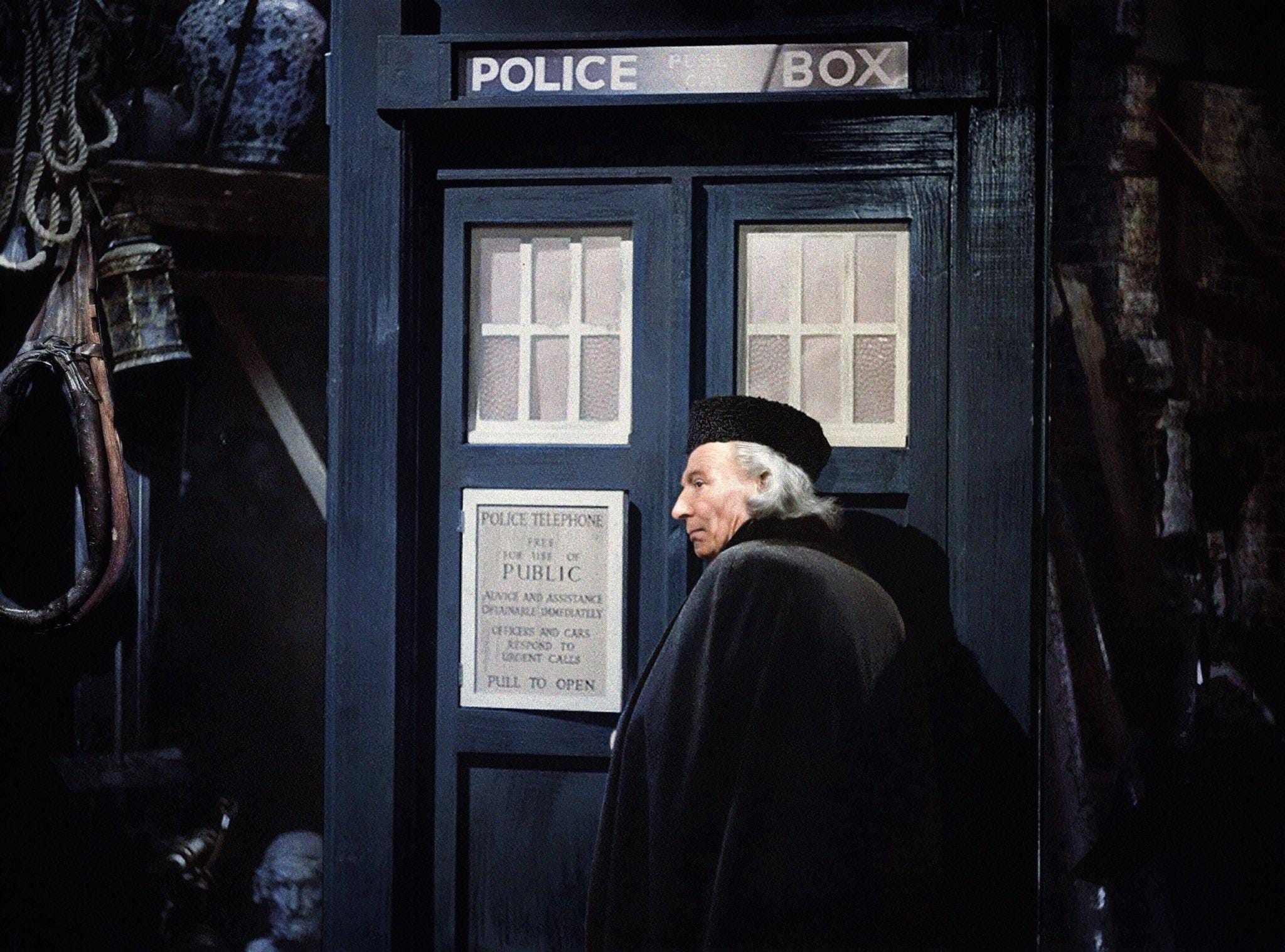
The TARDIS understood this long before I did – though it had a few years head start!
Boxes in Time
And not just in space.
A day is a box.
Twenty-four hours with a beginning and an end.
An hour-long meeting.
We put things into it.
Conversations.
Meals.
Journeys.
Plans.
A week is a box.
A month is a box.
A year is a box.
A calendar is a box-making machine.
Perhaps thinking itself is a form of boxing.
We take something vast and untidy and give it edges.
The Money Box
The strange thing is that boxes are often more psychological than physical.
Consider money.
People will sometimes keep thousands of pounds in a savings account while paying interest on debt elsewhere.
Mathematically it can seem irrational.
Psychologically it often makes perfect sense.
The boxes are doing different jobs.
Holiday money.
Emergency money.
Pension money.
House money.
The numbers may be identical.
The meaning is not.
A Pocket of One’s Own
The same thing happens with children.
At some point a child begins wanting boxes of their own.
A toy box.
A pencil case.
A lunch box.
A school bag.
A drawer.
A bedroom.
A pocket.
Especially a pocket.
A pocket may be the smallest piece of land most of us ever own.
A tiny personal territory sewn into our clothes.
Inside might be a marble.
A conker.
A coin.
A note.
A treasured piece of string.
Objects of almost no value to anyone else.
Immense value to the owner.
I was listening to The Hobbit recently and found myself wondering about Bilbo’s pockets.
Perhaps one pocket contained a bit of string.
The other contained the most consequential object in Middle-earth.
The pocket doesn’t tell us the importance of the thing.
A tiny box can contain an enormous future.
A seed packet can contain a forest.
A notebook can contain a revolution.
A wedding ring box can contain an entire life.
A cardboard archive box can contain the only surviving copy of something.
The contents matter.
The possibilities matter more.
Not Every Container Is a Box
Which brings me to a curious realisation.
Not every container is a box.
A greenhouse is more than a box.
A garden is more than a box.
A classroom is more than a box.
A box stores.
These things transform.
A seed packet stores a seed.
A greenhouse grows a plant.
A classroom grows a mind.
The purpose is not preservation alone.
The purpose is change.
Perhaps there are two kinds of containers.
Those that protect.
And those that transform.
The best ones do both.
Cradle to Cradle
At art school I once designed a piece of furniture designed to accompany a person through life.
A cot.
Then a desk.
Then a bookshelf.
Then something else again.
Eventually, a coffin.
I don’t remember the details, but I remember the idea.
Cradle to grave.
Life carried from one container to another.
One stage to the next.
One box to the next.
A cradle.
A classroom.
A workshop.
A house.
A shed.
An archive.
A coffin.
Boxes marking the stages of a life.
The Box Tree
I assumed for years that a box was named after its shape.
It isn’t.
The word comes from a tree.
The box tree.
Originally a box was not a rectangle.
It was a piece of woodland transformed into a container.
The material came first.
The geometry came later.
Which somehow feels appropriate.
A box creates boundaries.
Trees do this too.
The Cybernetic Box
Perhaps that’s why boxes appear everywhere in systems thinking and cybernetics.
Draw a rectangle on a piece of paper and we immediately call it a box.
Not a rectangle.
A box.
An inside.
An outside.
A system.
An environment.
A simple pencil line creates a distinction.
And then second-order cybernetics asks an awkward question.
Who drew the box?
Who decided what was inside?
Who decided what was outside?
The observer, it turns out, is standing inside a box as well.
Perhaps the first box was not a container.
Perhaps it was a distinction.
A line drawn around something.
“This.”
Not that.
Opening the Box
Perhaps civilisation itself is nothing more than a vast collection of nested containers carrying things forward through time.
Seeds inside packets.
Packets inside drawers.
Drawers inside sheds.
Books inside libraries.
Ideas inside books.
Memories inside minds.
Days inside years.
Years inside lives.
We spend much of our existence putting things into boxes and taking them out again.
Perhaps we begin in a container that is more than a box.
We certainly spend our lives surrounded by them.
And at the end many of us are placed gently into one.
Yet perhaps the most important thing about a box is not what it contains.
It is whether we remember to open it.
We put things away so that they are safe.
But safety comes at a cost.
Out of sight often becomes out of mind.
The seeds remain in their packet.
The book remains on the shelf.
The tool remains in the shed.
The idea remains in the notebook.
The savings remain in the account.
The archive remains unopened.
Designers know this.
What we see influences what we do.
What we don’t see slowly fades from attention.
A reminder on a desk.
A fruit bowl in a kitchen.
A book left open.
A note pinned to a wall.
Small nudges that keep things present.
Perhaps the challenge is not building better boxes.
Perhaps it is knowing when to open them.
After all, a seed packet is only the beginning of a garden.
And a box, however beautiful, is only a box until someone lifts the lid.
Which leaves one final question.
What’s in the box?
Thanks for reading! Subscribe for free to receive new posts and support my work.