I have a passport.
A new one.
It has never been used.
The previous one.
It was never used.
The one before that
did not exactly die
of overwork either.
This is not because
I dislike other countries.
Quite the opposite.
I like other countries
very much.
I like the thought of them.
I like the fact
that they are there.
I like streets
I have never walked down.
Shops
I have never entered.
Weather arriving
in a language
that is not mine.
I like all of that.
What I do not especially like
is travelling.
Or perhaps
that is too harsh.
I like the idea of being elsewhere.
I am less enthusiastic
about the process
of getting there.
Airports.
Queues.
Plastic trays.
Tiny bottles of liquid.
The faint sense
that modern travel
has been designed
by people who believe
discomfort builds character.
I have not left the country
in well over ten years.
That sounds dramatic.
It is not really dramatic.
It is just true.
And yet
I travel quite a lot.
Just not
in the approved sense.
Elsewhere
I travel in my head.
I always have.
Not in the grand sense.
More as a man
sitting at home
thinking yes,
I would quite like
to be in a small
Japanese supermarket right now.
Or in Seoul.
Or in rural India
watching someone
buy vegetables
and discuss onions.
That is often enough.
Not always.
But often.
I suspect
what I want from travel
is not movement.
It is atmosphere.
The texture of a place.
A different rhythm.
Different signage.
Different packets of food.
Different ways
of crossing roads.
Different assumptions
about what counts
as normal.
That is the part I want.
Not the boarding pass.
Erewhon
I think this may be why
I have always liked
imaginary places too.
Not just fantasy worlds.
Places built
to think with.
Places invented
to expose the strangeness
of the real one.
Samuel Butler had Erewhon.
A country beyond the mountains.
A place whose name
leans suspiciously close
to nowhere.
Not nowhere as emptiness.
Nowhere as invention.
Nowhere as method.
Published in 1872,
Erewhon begins
like a travel narrative.
A young man
crosses into a hidden country.
Very quickly
it becomes something else.
A satire.
A sideways mirror.
A place where illness
is treated as crime.
Where machines are feared.
Where society’s rules
have been rearranged
just enough
to make our own
look absurd.
I love that move.
The invented country
that is not an escape
from reality,
but a better angle
from which to inspect it.
That may be one version
of positive dystopianism.
A world that is strange.
Skewed.
Flawed.
Slightly alarming.
But useful.
A world that reveals something.
A world you return from
carrying tools.
Meditation as transport
Meditation, for me,
sometimes becomes
a kind of travel.
Not always successfully.
It can be stubborn.
It can be scrappy.
It can turn
into ten minutes
of wondering
whether I left something
in the shed.
But at its best
it lets me go somewhere.
Or at least
approach somewhere.
I am not very good
at the version
that asks the mind
to empty itself completely.
My mind does not empty.
It decorates.
It arranges furniture.
It adds weather.
It wants to know
what the path looks like.
What colour
the walls are.
Whether there is water nearby.
What sort of light it is.
Morning light.
Late afternoon light.
The blue-grey
of a place
just after rain.
If I know that,
I can begin.
If I know
the architecture
of the place,
even loosely,
I can walk into it.
Sometimes I will help it along.
Watch a video.
Look at a map.
Read a little first.
Give the imagination
some furniture.
Then let it work.
Borrowed streets
One of the odd gifts
of the internet
is that it lets you borrow
the ordinary life
of other places.
Not the glossy version.
Not “Top Ten Hidden Gems
in Lisbon”.
I mean the smaller things.
A woman walking
to the shops in Osaka.
Someone taking a bus
through rain in Finland.
A man in Delhi
buying fruit
and talking to camera.
A walk through Seoul.
A bicycle ride
through Amsterdam.
No commentary.
Just wind.
Bells.
Traffic.
I love those.
Because that is where
a place begins
to leak through.
Not in its monuments.
In its habits.
Its pavements.
Its supermarket shelves.
Its chemists.
Its trees.
Its weather.
Especially its weather.
You do not get
the full sense
of a place this way.
Of course you do not.
You do not get
the smell of it.
You do not get
the weight of the air.
You do not get
the awkwardness
of standing
in the wrong place
on a station platform
and instantly realising
you have broken
some local rule
you did not know existed.
You do not get
the full thing.
But you get enough.
Enough for the imagination
to begin building.
Enough for the mind
to make a bridge.
Enough to begin.
Reconstruction
What interests me, I think,
is not just imaginary travel.
It is reconstructed travel.
How close can you get
to being somewhere
without physically being there?
Not perfectly.
Perfection is not the point.
I do not need
a flawless simulation
of another country.
I need something smaller.
Enough of the weather.
Enough of the light.
Enough of the pace
of a place.
Enough of the background noise.
Enough of the texture.
Then the imagination
can do the rest.
A video helps.
A map helps.
Street View helps.
Local radio might help.
A menu
from a neighbourhood café
would help.
The sound of traffic.
The shape of the buildings.
Someone describing
an ordinary Tuesday.
All of that helps.
And perhaps
technology will get better
at this.
Video already has.
It is more plentiful.
More intimate.
Less polished.
More ordinary.
And ordinary
is exactly what you want.
The ordinary
is where the place lives.
Not in the cathedral.
In the chemist.
Not in the famous square.
In the queue for bread.
Not in the panoramic drone shot.
In someone deciding
whether to buy mushrooms.
Returning
This may also explain
why I am perfectly happy
to revisit a film.
Gladly.
Repeatedly.
A good film
is not only a story.
It is a country.
You can go back to it.
Walk the same streets.
Sit in the same light.
Listen to the same weather.
Re-enter the same architecture.
I am happy
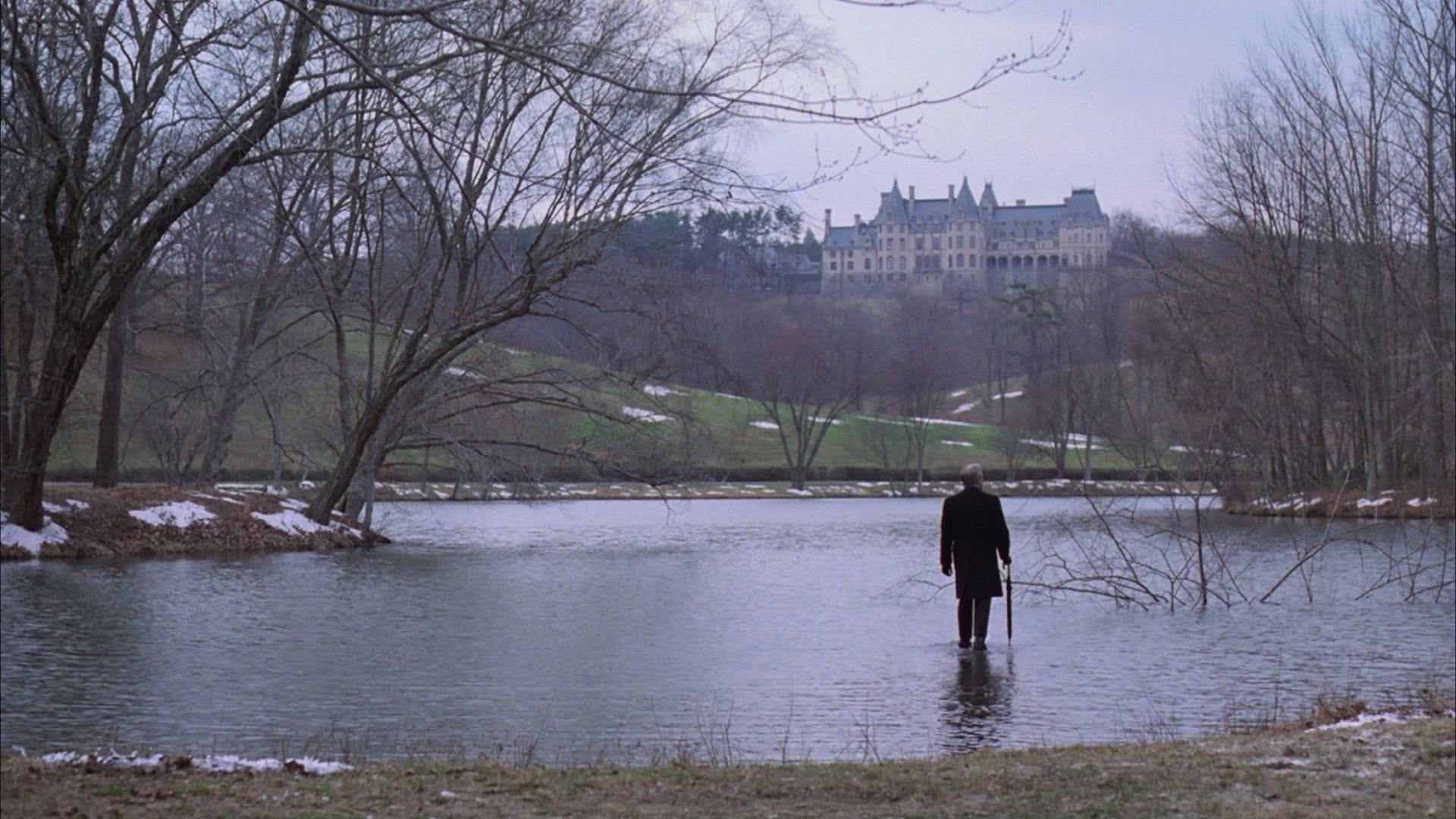
to revisit Being There.
Not just because
it is a wonderful film,
but because Chance
moves through the world
half-present, half-projected,
which feels close
to this whole question
of what it means
to be there at all.
What does it mean
to be there,
really there,
when so much of travel
happens in the mind?
Films hold still.
Places do not.
A film waits for you.
A city carries on.
A film preserves
its own weather system.
Its own rooms.
Its own timing.
Perhaps that is why
I am less certain
about revisiting
physical places.
A film can become
a reliable country.
A city never agrees
to do that.
A machine for nowhere
There is probably
a project in this.
There is probably always
a project in this house
if you look hard enough.
A travel kit
for staying home.
Choose a place.
Not a fantasy version.
A real one.
Then gather
its ingredients.
One walking video.
One soundscape.
One map.
One weather report.
One local meal.
One ordinary story
from someone who lives there.
One image
of a completely unremarkable street.
One meditation prompt.
One hour
of uninterrupted attention.
That might be enough.
Not to replace travel.
That is not the point.
And not to pretend
that being somewhere
and imagining somewhere
are the same.
They are not.
But they may be closer
than we admit.
Close enough
to matter.
Close enough
to widen the room.
Nowhere
I still have the passport.
It is still waiting
for a more conventional adventure.
Perhaps one day
it will get one.
Perhaps not.
In the meantime
there are whole countries
I have visited
in fragments.
In weather.
In pixels.
In meditation.
In maps.
In borrowed streets.
It may be avoidance.
It may be imagination.
It may be
a poor substitute
for the real thing.
It may be
its own thing entirely.
I am not sure.
I only know
that I have travelled
a long way
while sitting perfectly still.
And that some journeys begin
not with a suitcase,
but with a chair,
a screen,
a closed door,
and the old hope
that elsewhere
might still be reachable
from home.